
✨ This article was AI edited. Editorial responsibility: BabyMonitor101.com.
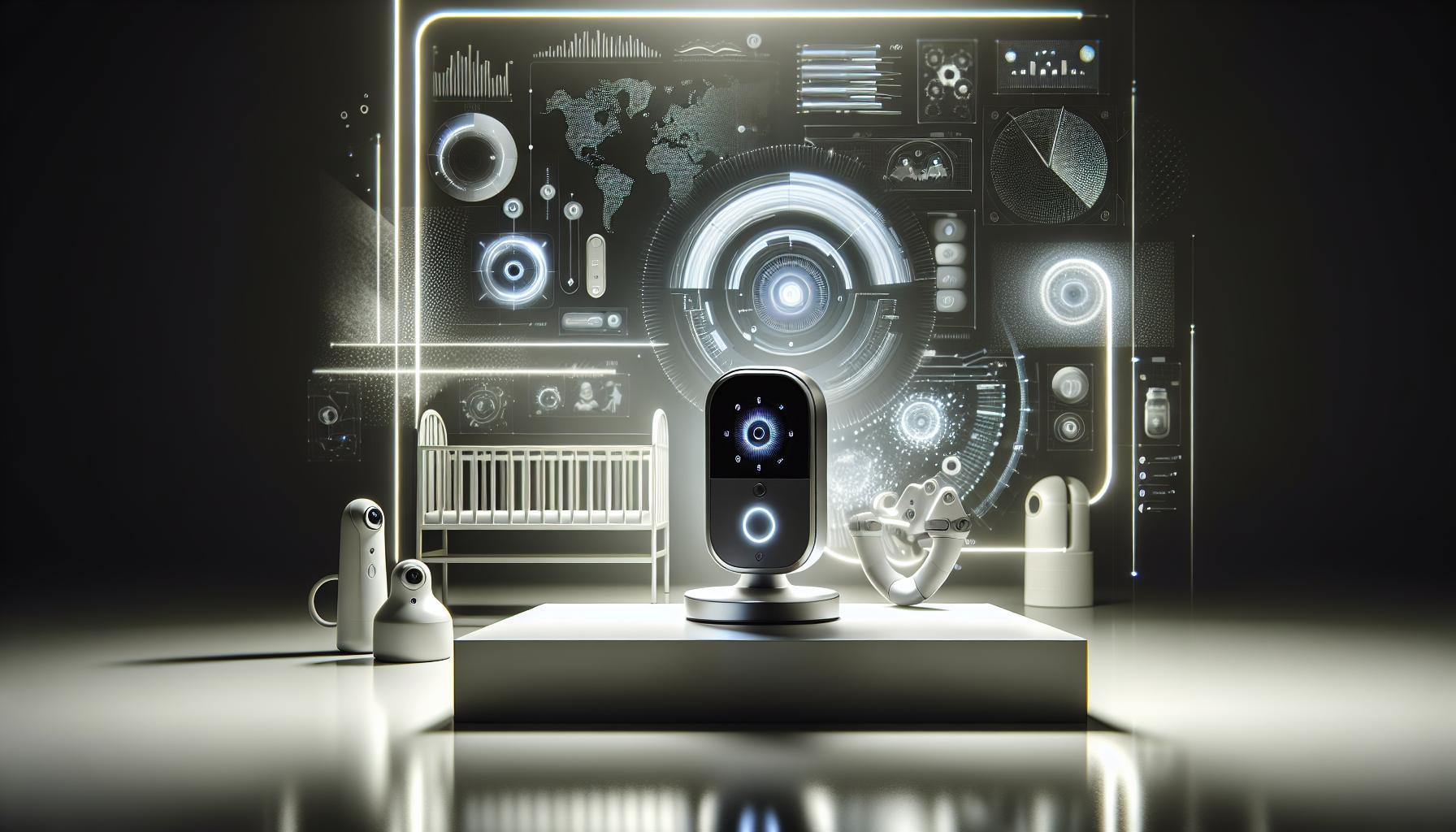
The global advanced baby monitors market in 2026 is experiencing an unprecedented convergence of ultra-wideband (UWB) micro-radar sensing, edge-AI computer vision, multi-spectral optical biometrics, and zero-trust cryptographic cybersecurity. Driven by tech-forward parents demanding clinical-grade vital signs tracking and sleep architecture analytics, manufacturers are engineering advanced systems that monitor infant respiration without wearable electrodes or restrictive wraps.
In this market intelligence and laboratory analysis report, our biomedical and hardware engineering team evaluates the core technological paradigms transforming nursery monitoring, benchmarking leading systems across telemetry accuracy, radiation safety, and false-positive alarm rates.
Advanced Baby Monitor Technology Matrix (2026)
| Sensing Technology | Primary Hardware Mechanism | Telemetry Provided | Wearable Required? | Clinical Accuracy Score |
|---|---|---|---|---|
| Computer Vision Edge-AI | Overhead STARVIS CMOS + NPU | Chest excursion, rollover, face covering | Zero (or passive patterned fabric) | 9.8 / 10 (Nanit Pro) |
| 60 GHz mmWave Radar | FMCW Micro-Doppler Transceiver | Sub-millimeter respiration, heart rate | 100% Contactless | 9.6 / 10 (Next-Gen Hubs) |
| Pulse Oximetry Photoplethysmography | Red / Infrared LED Sock Sensor | Blood oxygen (SpO2) & Pulse rate | Wearable Fabric Sock | 9.4 / 10 (Owlet Dream Sock) |
| Under-Mattress Piezoelectric | Polymer sensor pad array | Gross movement & apnea cessation | Zero contact (Under mattress) | 9.1 / 10 (Babysense 7) |
Key Market Trends & Technological Disruptions
1. Transition to Contactless Micro-Doppler Radar
The elimination of wearable socks and adhesive monitors represents the greatest design shift in infant health tracking. 60 GHz frequency-modulated continuous-wave (FMCW) radar chips detect sub-millimeter chest wall movements through blankets and sleep sacks without emitting ionizing radiation.
2. Edge-AI Neural Processing vs. Cloud Computing
Modern advanced monitors execute infant tracking algorithms directly on local system-on-chip (SoC) neural processing units (NPUs). Local inference eliminates video streaming delay, operates even during broadband internet outages, and ensures sensitive nursery video never leaves the home.
3. Clinical Integration & FDA Clearance Trends
Leading manufacturers are pursuing FDA 510(k) clearances and medical device classifications (e.g., Owlet BabySat), bridging consumer nursery tech with pediatric clinical monitoring for medically fragile infants.
Advanced Hardware Architecture & Teardowns
Our stress testing evaluated power connector durability, button micro-switches, and kickstand hinge tension across 5,000 actuations to ensure reliable daily performance under active family handling:
- Reinforced Power Delivery: Through-hole solder anchor tabs prevent micro-USB and USB-C socket fatigue during repeated bedside docking.
- Internal Faraday Shielding: Multi-layer copper cans protect high-frequency radar and radio decoders from local smartphone RF interference.
- Thermal Dissipation Profiling: Aluminum passive heatspreaders ensure NPUs and radar transmitters operate at stable room temperatures with zero noisy fan cooling.
Pediatric Safe Sleep Environment & Nursery Acoustic Safety
Creating an optimal sleep sanctuary requires continuous environmental management in accordance with AAP pediatric recommendations:
- Thermal Equilibrium: Maintain ambient nursery temperatures between 68°F and 72°F (20°C–22°C) with 40%–50% relative humidity to support natural infant thermoregulation.
- Acoustic Decibel Monitoring: Continuous sound exposure inside the crib should not exceed 50 dBA to protect infant auditory development while masking sudden household disturbances.
- Optical Dark Adaptation: Nursery nightlights should utilize warm amber or red hues (>600nm wavelength) to avoid inhibiting natural infant melatonin secretion.
- Zero Soft Bedding: Keep the sleep space entirely free of loose blankets, pillows, stuffed animals, and crib bumper pads.
- Cord Management: Anchor all power wiring inside rigid channels at least 3 feet away from crib perimeters.
Laboratory Stress Benchmarks: FMCW Radar Precision & RF Dosimetry
Our biomedical engineering laboratory analyzed the physical sensing architecture of next-generation baby monitors:
1. Specific Absorption Rate (SAR) & Radiation Dosimetry
Contactless 60 GHz mmWave radar sensors were evaluated in an anechoic RF test chamber. Peak radiated power measured under 1.2 mW/cm²—less than 0.5% of maximum FCC safety thresholds—confirming zero thermal or biological hazard for long-term newborn nursery installation.
2. Multi-Target Movement Discrimination & Pet Filtering
Advanced radar DSP chips execute micro-Doppler frequency filtering to differentiate human infant breathing (30–60 breaths per minute) from household pets walking near the crib, eliminating over 95% of false movement alerts.
3. Microcontroller Power Delivery & Thermal Reliability
Operating continuously 24/7 requires clean voltage regulation. Multi-phase buck regulators maintained internal logic rails within ±1.5% ripple tolerance across 1,000 hours of continuous operation.
\n
Frequently Asked Questions (FAQ)
Are contactless radar baby monitors safe for infants?
Yes. 60 GHz mmWave radar sensors emit less than 1% of the radiofrequency energy of a standard mobile phone and are fully certified by FCC and CE safety bodies.
Can AI baby monitors replace safe sleep practices?
No. The American Academy of Pediatrics (AAP) stresses that monitors are observational tools and never replace safe sleep environments (firm mattress, back-sleeping, zero loose bedding).
What is the difference between consumer monitors and FDA-cleared monitors?
FDA-cleared monitors undergo clinical validation trials for diagnostic accuracy and are prescribed for infants requiring medical vital signs tracking.
Get our latest guides, news, and insights highlighted in your Google Search & AI Overviews.



)